
Hanukkah, the Jewish festival of Lights,, began early this year, at the end of November. Nonetheless the theme resonates beyond the holiday week. An exploration of the seemingly simple act of lighting candles which has been both dangerous and courageous.
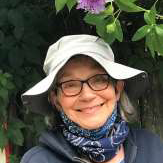
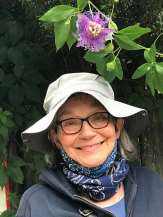
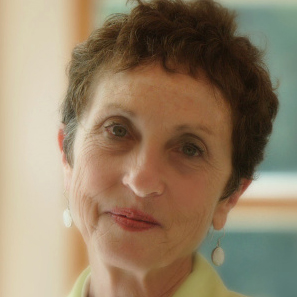
Rev. Marti Keller has been a parish, community and social justice minister for more than 23 years. Her “Jewnitarian” involvements include co-editing “Jewish Voices in Unitarian Universalism,” and other UUA publications around the Jewish source of our living tradition. She has been the President of UUs for Jewish Awareness and is currently a member. She is part of a ministerial team launching an online Mussar Jewish values program in 2022. She is also past vice president of the Society for Humanistic Judaism and serves on the advisory team for the international Secular Synagogue.
Craig will perform four original works plus he will be leading the Congregation in songs to sing along with.
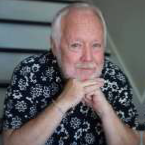
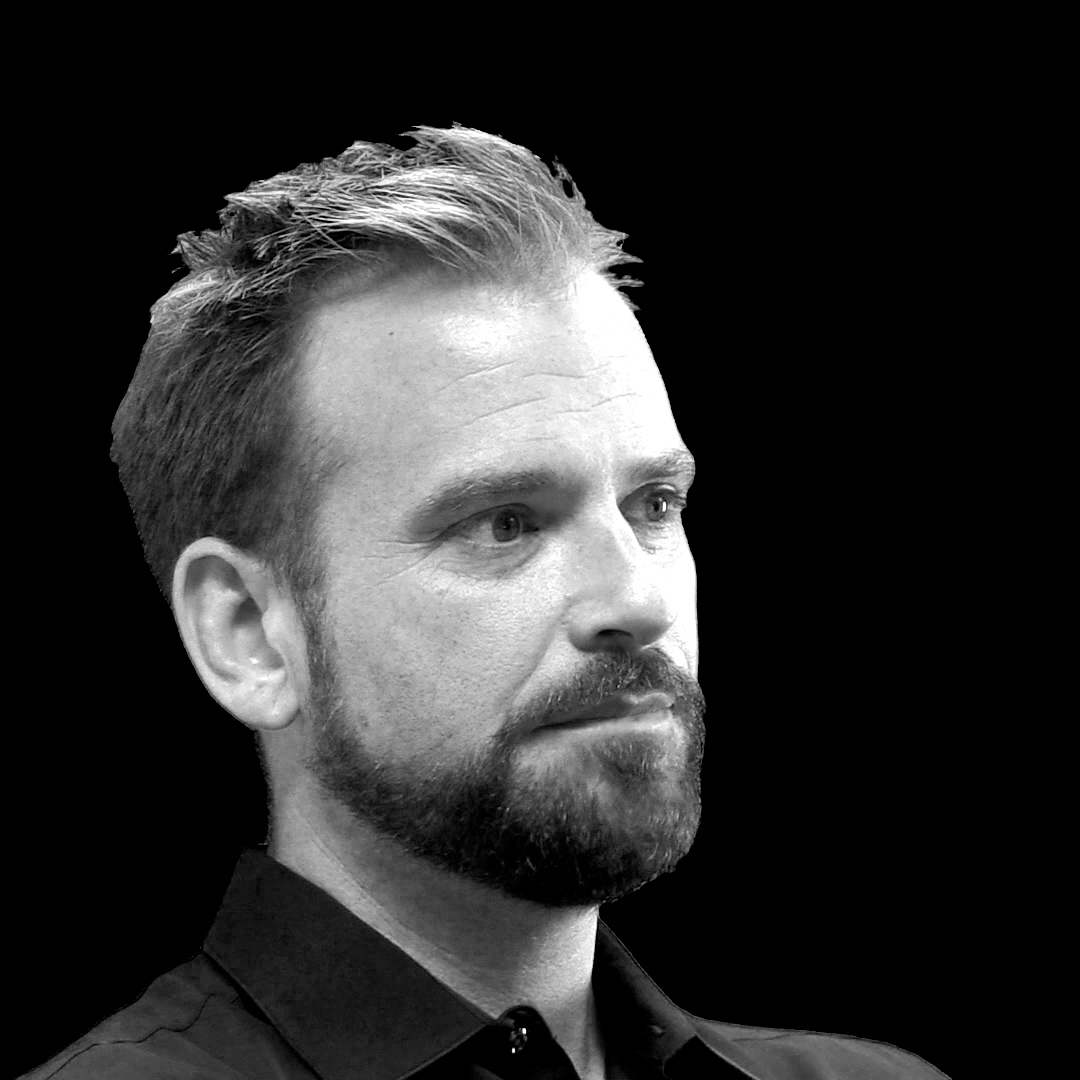
Craig Rafuse is a master carpenter, a musician, and an activist who has been involved in performing music and theater for 50 years. He’s wandered through this country and through Europe and the Middle East. He’s influenced by Chet Atkins, the Beatles, Phil Ochs, the Grateful Dead, Woody Guthrie, Thelonius Monk, and Pig Iron and the Back Bayou Band, not to mention Bertholt Brecht. He’s sung for politicians in the statehouse (powered by hot air) and anti-nuke activists (powered by solar energy). He’s especially proud of his involvement with community-oriented musicial efforts such as those of Joyce Brookshire, Amanda Perdrew and Brenda Boozer. Craig’s music is eclectic and incredibly beautiful. Harmonies and accompaniment are rich and varied, showing a jazz influence here, a folk/traditional influence there. Chord changes and rhythms are complex. Space is everywhere, providing delightful opportunities for the listener to catch up and sink in. In addition to being a fine instrumentalist, Craig writes attention-holding lyrics. By turns, charming, witty, and satirical, his eclecticism takes him from the frustrations of the small businessman to political greed, to youthful waywardness, and to finding time for love and life in a world beset by hurry.
If one’s spiritual and religious life is not based in theism, where might one find transcendence? What spiritual practices are available to an atheist? Join us as we explore atheist-accessible spirituality and spiritual practice.
Bio: Rev. Kim Palmer is an ordained Unitarian Universalist minister serving as an affiliated community minister with the Unitarian Universalist Metro Atlanta North congregation. She is also a board-certified chaplain and has most recently been serving Emory University in the dual role of chaplain and spiritual health researcher, although she recently transitioned to a very part-time contracting position as she and her wife Marty stepped into retirement.
Our Fellowship Minister, Rev. Marsha Mitchiner, has served the Congregation for over two decades, since ordination by us, following her study with Lanier Clance.
She counsels, connects, and contacts members and friends, and for those who need it, performs the laying-on of hands in her role as a massage therapist.
Many of us can vouch for the quality of her work, and appreciate the wisdom, restraint, and compassion she brings to the job of caring for our Congregation. Marsha speaks once each quarter, and helps smooth the functioning of the Congregation innumerable times in between.
“Constitutions, Founders, and Poets: the Unacknowledged Legislators of the World.”
H. Robert Baker is Associate Professor of History at Georgia State University and is the author of Prigg v. Pennsylvania: Slavery, the Supreme Court, and the Ambivalent Constitution (2012) and The Rescue of Joshua Glover: A Fugitive Slave, the Constitution, and the Coming of the Civil War (2006). His scholarly articles have appeared in the Law and History Review, Common-Place, and the Journal of Supreme Court History. He holds a Ph.D. in History from UCLA, where he studied with Joyce Appleby. He also writes about food and wine for the blog Tropics of Meta.
“From Emergency Living to a New Way of Life: Mutual Aid and Safety for All.”
Dr. Elizabeth Corrie teaches at Candler School of Theology, Emory University. Her teaching draws on commitments to both peace with justice and the education of young people, particularly the development of teaching and ministry that empower people for global citizenship.
Having focused her doctoral work in 19th century philosophy and theology, Corrie became increasingly interested in practical theology as her work with youth and in peace and justice activism deepened. Her research interests include transformative pedagogy, theories of nonviolence, and conflict transformation. Her current book, Youth Ministry as Peace Education: Overcoming Silence, Transforming Violence (Fortress Press, 2021), focuses on creating a new approach to youth ministry that teaches young people how to overcome disempowerment and transform violence in their communities.
As part of her commitment to anti-racism, Corrie became involved with the Metro Atlanta Mutual Aid Fund (MAMA), a project that arose out of the emergency needs of the COVID crisis, with a specific commitment to funding Black, Indigenous, and other peoples of color. MAMA’s long-term vision of building the infrastructure for a post-capitalist system through a “solidarity not charity” model of mutual aid inspires Dr. Corrie’s reflections for this talk.
Reverend Janna Nelson was ordained by the First Existentialist Congregation of Atlanta in 1999, where she was an active member for decades before moving to Albuquerque, New Mexico, to be closer to her large family. She is a retired elementary school teacher and preschool director who enjoys children and who learns as much from them as they do from her. She was doing singing with a sister in classrooms in a local school until the pandemic closed schools down in March 2020.
Janna and her husband, Scott Hooker, also play continue to play music together, finding new folks to play with here. She is also enjoying having time to cultivate a regular writing practice.
She is honored to be speaking to the congregation and is grateful to be invited to share reflections through an existential/feminist perspective. She had personal experiences as a young person that stirred ideas about life that she later found expressed by these writers and thinkers. These ideas and concepts continue to be a touchstone for a way to live life more fully, with all its complexity and grief and uncertainty, to participate in freedom from oppression and alienation of all kinds, a way to keep moving forward, to help build something good, to participate in healing.
Kathy McGuire will talk about her experiences studying in a virtual community the past year at the Druid College, and how Druidism fits in with multiple identities as a UU, existentialist, small farmer, and artist.
Originally hailing from San Antonio, Texas, Dr. Katherine McGuire is a lifelong learner with diverse interests, holding degrees in psychology, biomedical sciences, music performance and public administration. She and her family live on a small farm in the woods in Conyers, Georgia, where they enjoy the company of chickens, quail, ducks, rabbits, cats, dogs, and a hooded rat. During the work week, you can find her at Oxford College of Emory University, where she serves as the Director of Institutional Research.
“This is Not Who We Are: Thoughts on Living Up to Who We Are as Humans”
Anthony Knight is the Founder, President & CEO of The Baton Foundation—a Georgia nonprofit organization that serves the emotional, intellectual and cultural needs of Black boys ages 10-17. Before founding the Foundation, Mr. Knight worked for twenty-two years as a museum educator and consultant. Mr. Knight has extensive experience with and interest in African American history and culture, public and living history, informal education and Black youth. Mr. Knight’s work with The Baton Foundation reflects his ongoing interest in the issues and practices related to the collecting, preservation and interpretation of information about and material culture from the African Diaspora. Mr. Knight’s undergraduate work was in Spanish and English (Ohio Wesleyan University), and his graduate work was in museum education (The George Washington University). Mr. Knight also holds a degree in Spanish-to-English translation from the Núcleo de Estudios Lingüísticos y Sociales, Caracas, Venezuela. Mr. Knight is a New York City native.
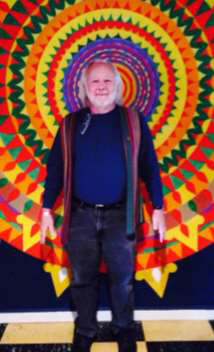
Born and growing up in seacoast New Hampshire, Dave Bryant Hayward became an activist while a student at George Washington University in Washington, D.C. from 1967 -1971.
Desperately coming out to the legendary Frank Kameny, president of the D.C. Mattachine Society, in a May 1969 phone call, Dave learned where the gay bars were in D.C. In the Fall he joined the Mattachine Society at an outdoor reception, and co-founded the Washington, D.C. Gay Liberation Front in January 1970. The GLF celebrated the first anniversary of the 1969 Stonewall riots at a D.C. intown park in 1970, and also picketed the gay bar The Lost and Found on Capitol Hill for its multiple carding policies of women and people of color.
Dave is thrilled to have campaigned for Dr. Kameny for the House of Representatives in 1971, as the first openly gay man to run for Congress. Also he wrote for the GWU Hatchet newspaper all four years, often covering LGBTQ themes in the arts, and for the DC GLF Newsletter.
Since October 1971 Dave has aided and abetted every Atlanta Pride. One of the core collective producing Atlanta Pride in 1972, the first Pride March in the streets, Dave is honored to be thrown out of two gay bars for promoting Pride.
Dave Hayward, right; Elizabeth Monahan, center, Greg James, left
Initially “the city too busy to hate” spewed backlash for a gay march in the streets, which abated after a successful event, culminating in Georgia’s first openly gay political appointee:
Charlie St. John appointed by Mayor Sam Massell, to Atlanta’s Community Relations Commission in January 1973.
From 1977 to1979 he and his former partner Greg James anchored “Gay Digest” on Radio Free Georgia WRFG FM 90.1, and he and Greg produced Atlanta and Georgia’s first two LGBTQ film festivals in 1979 under the auspices of the newly formed Atlanta Gay and Lesbian Center.
Primarily Dave’s mania for social justice expresses in his writing, and he has published in local, regional, national, and international media, including The Advocate, OUT Magazine, Canada’s LGBTQ magazine Frontiers, and most recently in Georgia Voice, where he reveals our LGBTQ roots, and pens tributes to pathfinders and pioneers and trailblazers.
After founding Touching Up Our Roots in 2002, in 2016 Dave became one of Atlanta Pride’s Grand Marshals. In 2015 he created Our Founding Valentines with Atlanta Pride to recognize community icons, and in 2016 he initiated the LGBTQ Story Tour with Pride and with the LGBT Institute at the Center for Civil and Human Rights. Since 2017 he and Lesbian herstorian Maria Helena Dolan have co-hosted the Story Tour.
Currently with a grant from the Georgia Humanities Council, Emory University professor Eric Solomon and Dave are posting the LGBTQ Story Tour online, for an October launch in conjunction with October Pride and National Coming Out Day October 15th.
That’s All Folks!
Dave Bryant Hayward
Coordinator, Touching Up Our Roots, Inc.: Georgia’s LGBTQ Story Project